The most expensive mistake a startup can make isn't building a buggy product—it's building the wrong product.
In the rush to launch, Founders often skip the most critical phase of the product lifecycle: Validation. At BWS, we believe that the best way to predict the success of a feature is to try and kill it before it’s even built. We call this "Validating the Invisible."
The Assumption Wall
Every new product is built on a foundation of assumptions.
- “Users will pay for X.”
- “Feature Y will solve problem Z.”
- “The target market is segment A.”
The longer these assumptions go untested, the higher the risk of "Market Mismatch." By the time you’ve built a full-stack application, you’ve spent thousands of dollars on a hypothesis that might be fundamentally flawed.
Techniques for Low-Fidelity Validation
Validation doesn't require code. It requires curiosity. Here are three techniques we use at BWS to de-risk our clients' projects:
1. The Paint-Refined Landing Page (Smoke Testing)
Before building a SaaS dashboard, build a landing page. Use high-fidelity design to sell the vision of the product. If people are willing to give you their email address or click a "Pricing" button based on a one-page pitch, you have verified Intent.
2. The Concierge MVP
Instead of automating a complex workflow (like AI-driven lead sorting), do it manually. Have a human perform the task "behind the curtain." If the user finds value in the result, then you have verified Value. You can automate later.
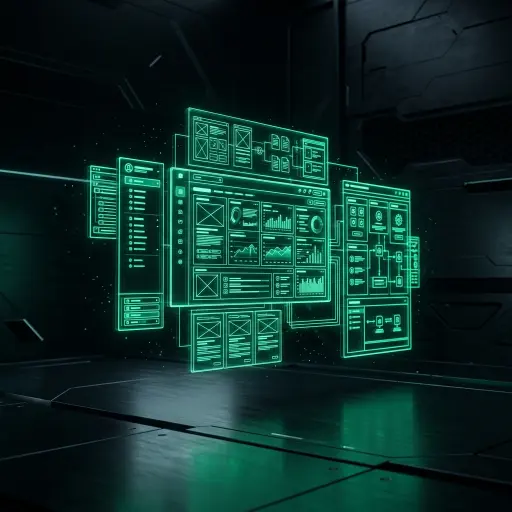
3. High-Fidelity Blueprinting
As discussed in our previous post on High-Fidelity Honesty, detailed wireframes and prototypes serve as a technical contract. Showing these to potential users allows you to gather feedback on the logic of the app, not just the look.
The BWS Discovery Phase
When you partner with BWS, we don't just ask for a feature list. We conduct a Discovery Workshop.
We look for the "Invisible" risks:
- Technical Feasibility: Can this API handle the load?
- User Friction: Will a non-technical user understand this navigation?
- Business Logic: Does this pricing model actually scale with the user's growth?
By the time we write the first line of code, we have a "Validated Roadmap." This ensures that every developer hour is spent building something that has a proven reason to exist.
Conclusion: Start with 'No'
The goal of validation isn't to prove yourself right; it's to find where you are wrong. It is much easier to delete a line in a blueprint than it is to refactor a production database.
If you want to build a product that lasts, start by questioning everything. Validate the invisible, and the visible will take care of itself.
Ready to de-risk your next project? Let’s start a Discovery Phase together.