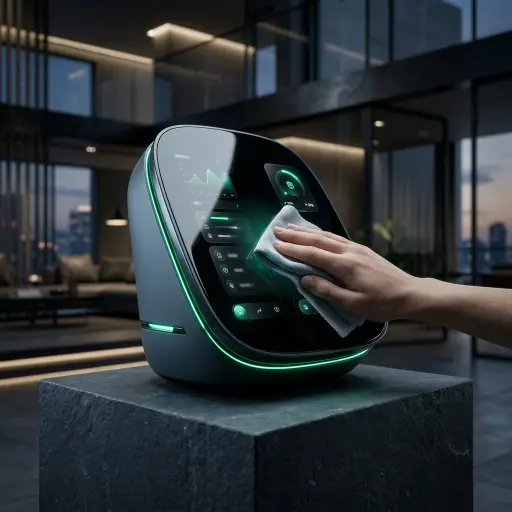
The "scrappy" MVP is a rite of passage for many founders. The story usually goes something like this: build the core feature, ignore the styling, launch fast, and iterate based on feedback. In the early days of the web, this was sound advice. But in 2026, the "scrappy" MVP is more often a liability than a launchpad.
When we talk about a Minimum Viable Product, the emphasis is usually on the Minimum. At BWS, we argue the emphasis should be on the Viable. And in today’s hyper-competitive landscape, viability is inseparable from polish.
The Shift from MVP to MLP
The goal of an MVP is to validate an idea. However, if your prototype is buggy, slow, or poorly designed, you aren't validating your idea—you're validating your execution.
We’ve moved into the era of the Minimum Lovable Product (MLP). A "lovable" product doesn't just solve a problem; it builds an emotional connection. It says, "We care about the details, so you can trust us with your data."
Why Polish Equals Trust
For a SaaS platform, trust is the primary currency. If a potential client sees a dashboard that looks like a 2012 bootstrap template, they immediately question the security, scalability, and long-term viability of the backend.
Polish is a signal. It indicates that the team behind the product has the discipline to sweat the small stuff. When you present an MVP that feels like a finished product, you shift the conversation from "Does this work?" to "How soon can I deploy this?"
The BWS Protocol: The "Delight Layer"
When we build products for our clients, we follow a two-tier engineering philosophy:
- The Boring Infrastructure: We set up the robust "plumbing"—multi-tenant isolation, secure auth, and scalable billing engines. This is the foundation that ensures your product works.
- The Delight Layer: This is the polish. It’s the 500ms micro-animations, the glassmorphic sidebars, and the path-aware canonical SEO. This is the layer that ensures your product sells.
By integrating the delight layer into the MVP phase, we reduce "Brand Debt." You don't have to apologize for how the product looks while explaining how it works.
Avoiding the "Technical Debt" Trap
A common counter-argument is that polish takes too much time. This is where the myth of the scrappy MVP is most dangerous. Adding "polish" later is almost always more expensive than building it in from day one.
When design is an afterthought, you end up with a fragmented UI that requires a full refactor six months down the line. By establishing a unified design system and a high-fidelity interaction layer at the start, you create a scalable foundation that can grow with your feature set.
Conclusion: Invest in Identity
Your MVP is your product’s first impression. Don't waste it on a "minimum" effort. By investing in maximum polish for your minimum features, you build a product that isn't just viable—it's unforgettable.
At BWS, we help founders turn abstract ideas into premium digital products. We don't just build software; we engineer trust.
Looking to build your next breakthrough SaaS? Initialize a Workshop with our engineering teams today.