In the world of Laravel development, we often treat migrations as the "final word" on our database structure. But as any developer who has managed a high-traffic enterprise application knows, the reality is far more chaotic.
Between manual production tweaks, legacy baggage, and the need for quick environment spin-ups, our databases often take on a life of their own. We realized that migrations were only one part of the story. To truly master the database, we needed to manage its entire lifecycle.
This realization led to the creation of the Laravel Database Lifecycle Suite.
The Invention of Necessity
They say necessity is the mother of invention. For our team, the "necessity" was a 10-year-old legacy portal with over 400 tables and zero migration history. We were tasked with modernizing the stack, but first, we had to understand what was actually in the database.
Standard tools failed us. We needed something that could snapshot the current state, detect when data (not just schema) had drifted between environments, and identify missing indexes that were killing performance.
We didn't just build a tool; we built a comprehensive lifecycle management engine.
Core Pillars of the Suite
1. Schema Snapshots & Versioning
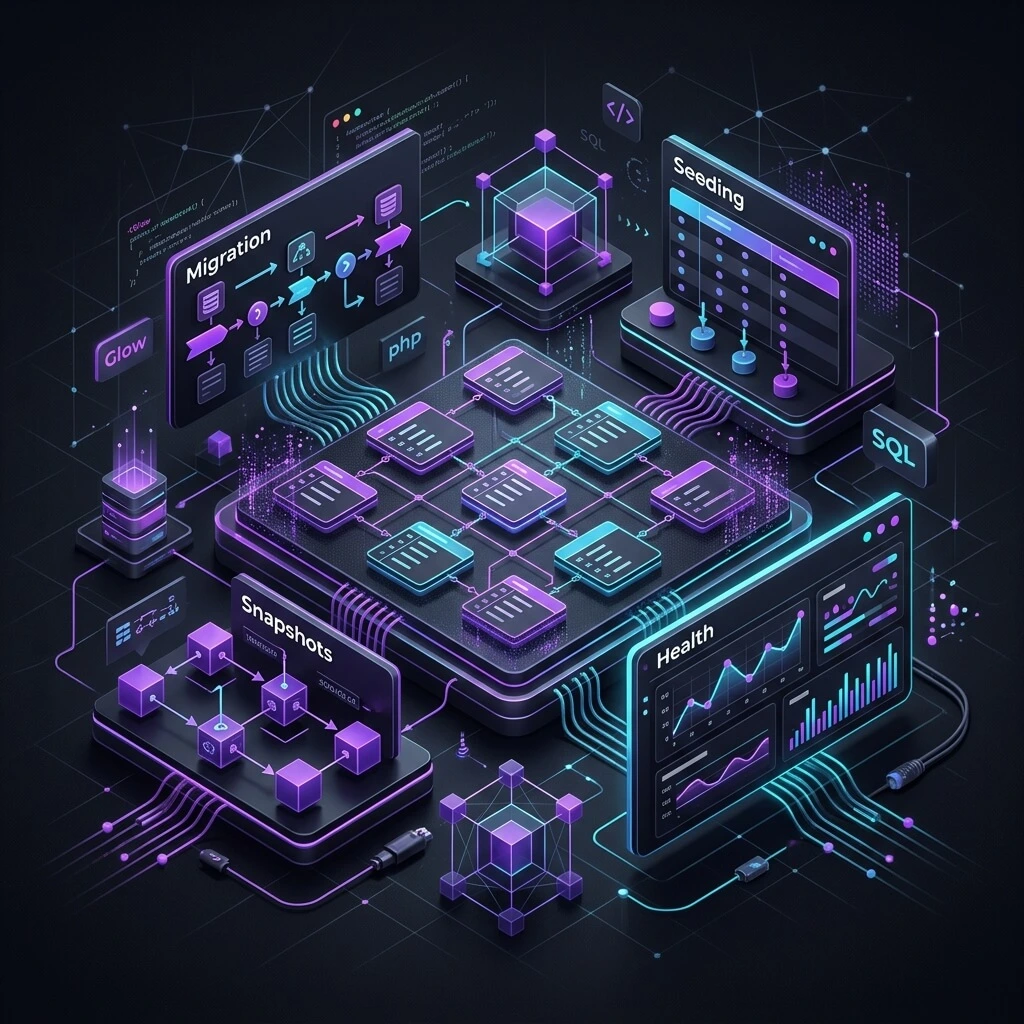
Managing large-scale migrations can be slow. The Suite allows you to create "Schema Snapshots"—compressed, versioned blueprints of your database state. This allows team members to spin up fresh environments in seconds rather than running hundreds of migration files.
2. Deep Data Drift Detection
Schema drift is one thing, but Data Drift is the silent killer. When configuration tables or lookup data diverge between staging and production, bugs become impossible to replicate. Our suite audits your critical data rows and flags discrepancies before they reach your users.
3. The Index Health Audit
Unused indexes slow down writes. Missing indexes kill reads. The Suite performs a heuristic analysis of your database usage patterns to suggest exactly which indexes should be added—and which ones are just wasting space.
4. Legacy Reverse Engineering
Modernizing a legacy system? The Suite’s reverse-engineering engine parses your raw SQL structure and generates clean, PSR-compliant Laravel migrations, complete with proper relationship detection and type-casting.
The Command Suite
The suite provides a comprehensive set of Artisan commands designed for both automated CI/CD checks and manual audits:
# Get a comprehensive health scorecard
php artisan db:lifecycle-status

# Audit indexes for redundancy and missing foreign keys
php artisan db:index-audit

# Detect row-level data drift across environments
php artisan db:data-drift --table=users

# Generate a visual ERD (Mermaid format)
php artisan db:erd
Why It Matters for Your Business
Database integrity isn't just a technical concern; it's a business risk. A single mismatched column type or a missing index can lead to downtime, data loss, or a degraded user experience.
By integrating the Database Lifecycle Suite into your workflow, you move from reactive firefighting to proactive management. You gain a "God view" of your database, ensuring that your production environment is as stable as your local dev setup.
The Road Ahead
This suite was born from the trenches of enterprise development. It’s built to handle the messiest, most complex database challenges you can throw at it. Whether you are building the next big SaaS or rescuing a legacy giant, the Database Lifecycle Suite is your foundation for stability.
It's time to stop worrying about your database and start mastering its lifecycle.
Author: Ahtesham
Lead Architect at Broadway Web Services.